
Tech
The Future of Work: How AI Workflow Automation Is Evolving Workflow Automation Tools

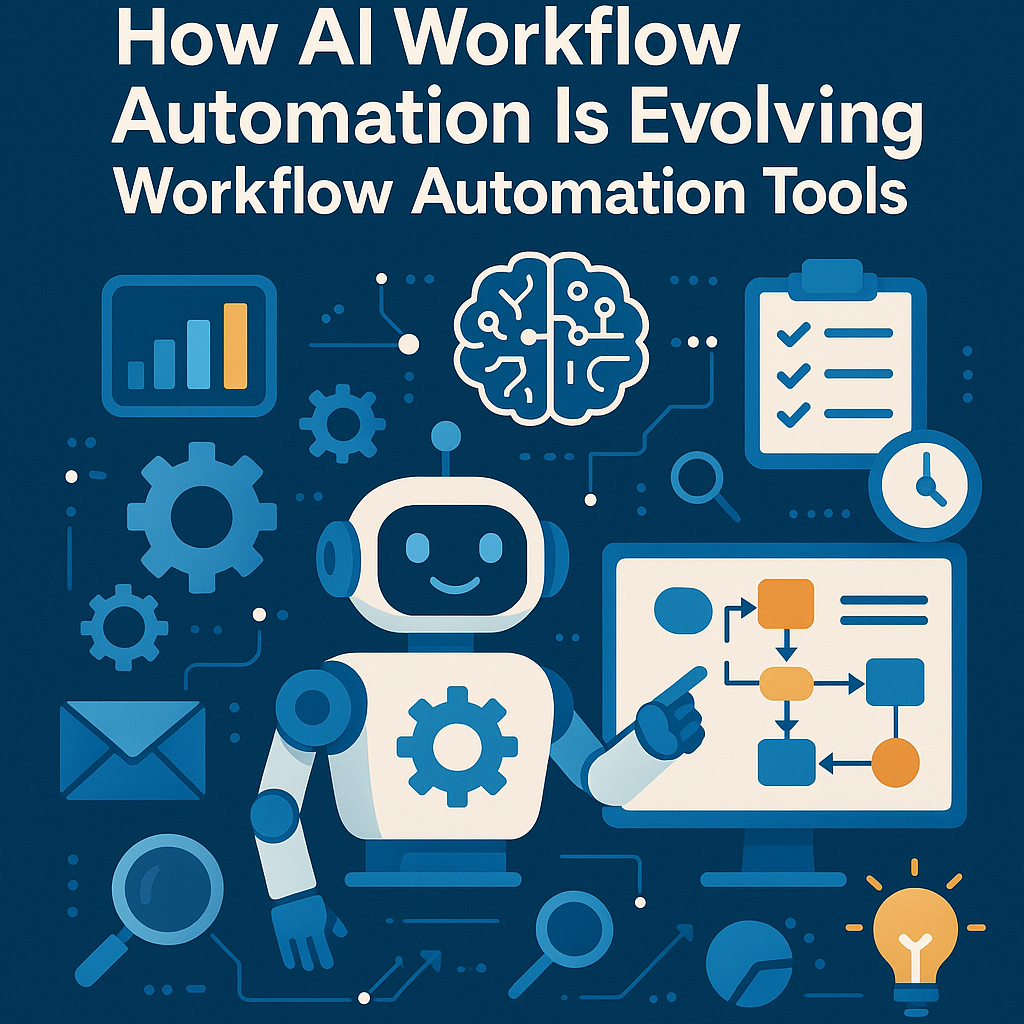
The way we work is changing faster than ever. Businesses across industries are embracing digital transformation to stay efficient, agile, and competitive. One of the biggest drivers of this change is AI workflow automation — a technology that combines artificial intelligence with process automation to make everyday business tasks smarter and faster.
Traditional workflow automation tools have already helped teams eliminate repetitive tasks and improve accuracy. But when AI enters the picture, these tools evolve beyond simple automation. They learn, adapt, and make intelligent decisions that once required human judgment. The result is a new era of productivity — one where workflows practically manage themselves.
The Evolution of Workflow Automation
Workflow automation has come a long way. In the past, automation was rule-based — users had to define every condition, step, and trigger manually. These systems worked well for repetitive processes but couldn’t handle exceptions or adapt to changing business needs.
Today’s world demands flexibility and intelligence. Businesses are not just looking for efficiency; they want automation that can think. AI adds this capability. It allows automation tools to understand context, predict outcomes, and continuously improve through machine learning.
For example, in procurement or finance workflows, AI can automatically detect anomalies, flag risks, and suggest corrective actions — something that would have taken days of manual review earlier. This evolution from static rules to intelligent insights marks a major leap in how businesses operate.
How AI Is Transforming Workflow Automation Tools
AI is reshaping the way workflow platforms work at every level — from data processing to decision-making. Below are the most significant ways AI is changing the game:
1. Predictive Decision-Making
AI algorithms analyze vast amounts of workflow data to identify patterns and predict what will happen next. In an approval workflow, AI can anticipate potential bottlenecks and suggest rerouting options before delays occur. This helps businesses act proactively rather than reactively.
2. Intelligent Task Assignment
AI-driven tools automatically assign tasks based on employee availability, workload, and expertise. Instead of random task distribution, automation ensures the right person handles the right job at the right time — improving both efficiency and accountability.
3. Natural Language Processing (NLP)
Modern AI tools understand plain English commands. This means users can simply type “Create a new vendor approval workflow” or “Show me pending invoices,” and the system instantly responds. NLP bridges the gap between humans and technology, making automation accessible to non-technical users.
4. Smart Data Extraction
Manual data entry has long been a major bottleneck. AI-powered optical character recognition (OCR) and document intelligence can now read, extract, and validate information from invoices, forms, and contracts. This not only saves time but also reduces errors caused by human input.
5. Continuous Learning and Optimization
Unlike traditional systems that follow static rules, AI automation learns from every workflow execution. Over time, it identifies inefficiencies, measures performance, and fine-tunes processes — resulting in constant improvement without human intervention.
Real-World Applications Across Industries
AI workflow automation isn’t just a buzzword — it’s being used across industries to solve real problems, often feeding into portfolio-level planning and execution to help organizations coordinate initiatives and scale delivery.
- Finance and Accounting: Automating invoice approvals, reconciliations, and expense processing with AI reduces turnaround time and improves compliance.
- Procurement: Intelligent automation helps in vendor onboarding, purchase order processing, and three-way matching by minimizing errors and accelerating approvals.
- HR and Recruitment: From resume screening to employee onboarding, AI streamlines repetitive HR workflows, allowing HR teams to focus on people, not paperwork.
- Healthcare: AI-enabled workflows handle patient records, clinical approvals, and compliance tasks, helping medical professionals focus more on patient care.
- Customer Support: AI chatbots and workflow triggers ensure faster ticket routing, automatic updates, and personalized resolutions.
In each of these areas, the integration of AI has reduced manual effort, improved decision quality, and significantly enhanced the employee experience.
The Business Impact: Speed, Accuracy, and Insight
The benefits of integrating AI with workflow automation tools go beyond time savings. Businesses gain:
- Enhanced Productivity: Automated processes work 24/7 without fatigue, delivering consistent results.
- Fewer Errors: AI minimizes human mistakes in data entry and decision-making.
- Deeper Insights: AI analytics provide visibility into process performance, helping leaders make data-driven decisions.
- Scalability: As businesses grow, AI ensures workflows scale effortlessly without additional manpower.
- Better Employee Experience: With routine tasks handled by automation, employees can focus on creative, strategic, and customer-facing work.
By automating smarter, companies position themselves to handle future challenges — from hybrid work models to global competition — with confidence.
Challenges and the Road Ahead
While AI workflow automation promises enormous benefits, it also brings challenges. Businesses must address concerns around data privacy, system integration, and change management. Employees need to be trained to collaborate with AI-driven systems and trust their recommendations.
Moreover, not all workflows are ready for AI adoption right away. Companies should start with small, high-impact use cases — such as approvals, document reviews, or customer support — and gradually scale up once the ROI becomes clear.
The key is to treat AI not as a replacement for human intelligence but as a partner that enhances it. When used wisely, AI amplifies human creativity and decision-making rather than eliminating it.
Conclusion
The future of work is not about humans versus machines — it’s about humans and machines working together. AI workflow automation is redefining what’s possible for businesses by transforming traditional workflow automation tools into intelligent systems that think, learn, and adapt.
Organizations that embrace this shift will not only automate faster but also operate smarter — creating workplaces that are more efficient, agile, and resilient. As AI continues to evolve, the line between automation and intelligence will blur, leading us into an era where work becomes not just faster, but fundamentally smarter.
Tech
Yalla Choy: Meaning, Usage, and Cultural Context
The phrase yalla choy may sound playful or confusing at first, especially if you hear it in casual conversation or online. It blends familiar sounds from different languages, which is exactly why it stands out. People use it to express urgency, humor, or shared understanding without stopping to explain. To truly grasp yalla choy, it […]

The phrase yalla choy may sound playful or confusing at first, especially if you hear it in casual conversation or online. It blends familiar sounds from different languages, which is exactly why it stands out. People use it to express urgency, humor, or shared understanding without stopping to explain. To truly grasp yalla choy, it helps to look beyond literal translation and focus on how people actually use it.
Understanding What Yalla Choy Means
Yalla choy does not have a strict dictionary definition, and that is part of its charm. The phrase feels conversational, often used to signal action, agreement, or a light push forward. Its meaning shifts slightly depending on tone, setting, and who is saying it.
In practice, people use yalla choy the way they use friendly nudges in speech. It can mean let’s go, hurry up, or come on, but without sounding harsh.That softness makes it useful in relaxed or familiar environments.
The value of the phrase lies in emotion rather than precision. It communicates mood and intention more than exact instruction. That emotional clarity often matters more than literal meaning in real conversations.
Linguistic Roots and Influences
The phrase yalla is widely known from Arabic-speaking cultures, where it commonly means let’s go or hurry. Choy, on the other hand, appears in South Asian and informal slang contexts, often used as a casual call or exclamation.
When combined, yalla choy reflects how languages blend in multicultural spaces. People naturally mix words they hear daily, especially in cities or online communities where multiple languages coexist.
This blending is not random. It happens because speakers want expressions that feel natural and expressive. Yalla choy survives because it sounds friendly, energetic, and familiar across cultural lines.
How Yalla Choy Is Used in Daily Speech
In everyday conversation, yalla choy is often used among friends or peers. It might be said when encouraging someone to move faster or join in without pressure. The phrase keeps things light and avoids sounding commanding.
Tone plays a big role here. Said with a smile, it feels inviting. Said jokingly, it can ease tension or add humor. The flexibility of tone makes it adaptable to many social situations.
Because it feels informal, people rarely use it in professional settings. Its strength lies in casual interaction, where warmth and shared understanding matter more than correctness.
Role of Informal Phrases in Modern Culture
Phrases like yalla choy show how language evolves to meet social needs. Modern communication values speed, relatability, and emotional clarity. Informal expressions often deliver all three more effectively than formal speech.
These phrases also help build group identity. When people share a way of speaking, they feel connected. Using the same expressions creates a sense of belonging without needing explanation.
In this way, yalla choy is more than words. It becomes a social signal, showing familiarity, friendliness, and cultural overlap in everyday interaction.
Online and Social Media Usage
Social media has given phrases like yalla choy a wider stage. Short, expressive terms work well in comments, captions, and messages where space and attention are limited. They convey tone quickly without long explanations.
Online usage often amplifies humor. People may use the phrase playfully in memes or casual replies. This keeps the expression alive and relevant, especially among younger users.
Digital spaces also encourage experimentation. New phrases appear, disappear, or evolve rapidly. Yalla choy fits this environment because it is flexible and easy to adapt.
Why Such Expressions Spread So Easily
The spread of yalla choy is driven by simplicity and sound. It is easy to say, easy to remember, and pleasant to hear. These qualities help any phrase travel faster through conversation.
Another factor is emotional usefulness. The phrase fills a gap between being too serious and too vague. It communicates intent without pressure, which people appreciate in social interactions.
Finally, shared exposure matters. Hearing a phrase repeatedly from friends or online makes it feel normal. Over time, repetition turns novelty into habit.
Common Misunderstandings About the Phrase
Some people assume yalla choy has a fixed or literal translation. This can lead to confusion when they try to define it too rigidly. In reality, its meaning depends heavily on context.
Others think such phrases are careless or incorrect language use. However, informal expressions play a real role in communication. They carry tone, emotion, and social cues that formal language often misses.
Understanding this helps avoid misjudgment. Instead of asking what it strictly means, it is more useful to observe how and when people use it.
Conclusion
Yalla choy is a small phrase with a big social role. It reflects cultural blending, informal communication, and the human need for expressive language. Rather than focusing on exact meaning, its value lies in how it brings people together through tone and shared context. As language continues to evolve, expressions like yalla choy remind us that connection often matters more than precision.
When it comes to monitors, bigger isn’t always better, especially if desk space is limited or you prefer a clean, compact setup. The UPERFECT 19-inch 4K 144Hz Monitor proves that you don’t need a massive screen to enjoy sharp visuals, smooth performance, and rich color quality. Designed for creators, professionals, and gamers alike, this compact display delivers impressive 4K clarity and high refresh performance in a size that fits almost anywhere.
Whether you’re editing high-resolution photos, working with detailed graphics, or enjoying fast-paced games, this monitor offers a polished visual experience that feels anything but small.
Incredible Detail Packed into a 19-Inch Screen
The first thing you’ll notice is the 4K UHD resolution (3840 × 2160). On a 19-inch screen, the pixel density is incredibly high, which means text looks razor-sharp, images appear crisp, and fine details really stand out. This makes everyday tasks feel cleaner and more refined, while creative work benefits from the added clarity.
Thanks to QLED panel technology, colors appear richer and more vibrant than on standard displays. The use of quantum dot enhancements helps produce more accurate hues and better contrast, giving images a lively and natural look, ideal for photo editing, video work, and visual design.
 Ultra-Smooth Performance with a 144Hz Refresh Rate
Smoothness is another area where this monitor shines. The 144Hz refresh rate makes everything feel more responsive, from scrolling through documents to watching high-motion content. Compared to typical 60Hz displays, the difference is noticeable right away.
For gamers, the higher refresh rate brings smoother gameplay and more fluid motion, especially in fast-paced titles. When paired with adaptive sync support like FreeSync, screen tearing and stuttering are reduced, resulting in a more seamless visual experience—provided your system supports it.
Even outside of gaming, the smooth motion adds a premium feel to everyday use. Rich Colors and Strong Contrast for Creative Work
Color performance is a major strength of the UPERFECT 19-inch monitor. With 107.8% DCI-P3 color coverage, it displays a wider range of colors than standard sRGB screens. This makes it well-suited for creative professionals who need accurate color reproduction for tasks like digital illustration, photo retouching, or video editing.
The display also offers a solid 1200:1 contrast ratio, helping create deeper blacks and brighter highlights. Combined with wide 178-degree viewing angles, the image stays consistent and vibrant even when viewed from the side, useful when sharing content or collaborating with others.
HDR Support for Added Visual Depth
HDR support adds another layer of visual enhancement by improving contrast and brightness range. Highlights appear brighter, shadows retain more detail, and scenes feel more dynamic overall.
While HDR performance on compact monitors depends on brightness levels, its inclusion still enhances supported content and provides a noticeable improvement over standard displays when watching movies or reviewing high-quality visuals.
Sleek Design with Practical Adjustability
The monitor’s slim profile and minimal bezels give it a modern, professional look that fits neatly into almost any workspace. Despite its compact size, it doesn’t feel cramped or outdated.
A built-in adjustable stand allows you to tilt the screen for comfortable viewing, and when portability matters, the stand folds neatly into the back of the monitor. For users who prefer a customized setup, the monitor also supports VESA 75 × 75 mm mounting, making it easy to attach to monitor arms or desk mounts for improved ergonomics.
Flexible Connectivity for Modern Setups
Connectivity is simple and versatile. The monitor includes full-featured USB-C ports and a mini HDMI input, allowing it to work with laptops, desktop PCs, gaming consoles, tablets, and other compatible devices.
USB-C support is especially convenient, as it can deliver both video and power through a single cable when supported by the source device. This helps keep desks tidy and makes the monitor ideal for mobile or minimalist setups.
An additional USB-A OTG port allows you to connect peripherals like a keyboard or mouse directly through the monitor, which is especially useful for compact workstations or laptop-based setups.
Built-In Audio and Eye-Friendly Features
The UPERFECT 19-inch monitor includes dual built-in speakers, which are handy for video calls, casual media playback, and general use. While they won’t replace a dedicated sound system, they eliminate the need for external speakers in many situations.
To support long hours of use, the monitor also features low blue light technology, helping reduce eye strain during extended work sessions or long stretches of screen time. This makes it more comfortable for professionals and creators who spend hours in front of their displays.
Who This Monitor Is Best For
This monitor is a great fit for several types of users:
● Content creators and designers who need high resolution and wide color coverage ● Professionals and remote workers who value sharp text and smooth performance ● Gamers who want a compact display with high refresh rates
● Users with limited desk space looking for a powerful secondary monitor
Its 19-inch size makes it ideal as a secondary screen alongside a laptop or larger monitor, while still delivering premium performance on its own.
 Final Thoughts: Small Size, Serious Capability
The UPERFECT 19-inch 4K 144Hz Monitor shows just how much performance can be packed into a compact display. With stunning 4K clarity, vibrant QLED colors, smooth 144Hz motion, and flexible connectivity, it offers a rare combination of power and practicality.
Whether you’re building a space-efficient workstation, upgrading a laptop setup, or looking for a high-quality compact display for work and play, this monitor proves that you don’t need a big screen to enjoy a truly impressive visual experience.

In the ever-evolving digital world, new and unfamiliar terms frequently surface, catching attention and sparking curiosity. One such term is findutbes. At first glance, it looks unusual, slightly familiar, and intentionally different. This mix of mystery and recognition is exactly why people search for it. In this detailed article, we’ll explore findutbes from every angle, uncovering its possible meaning, digital relevance, and why such words gain traction online.
Understanding the Term Findutbes
Findutbes is not a recognized English dictionary word, which instantly places it in the category of coined or invented terms. Words like this are often created for digital use, branding, or experimentation. Their meaning is not inherited from language history but shaped by how and where they are used.
Why Findutbes Looks Familiar Yet Different
One reason findutbes stands out is its resemblance to common digital terminology. It visually echoes words related to searching and online platforms, which creates instant familiarity. At the same time, the altered structure keeps it unique and searchable.
Possible Origins of Findutbes
Findutbes may be inspired by modern internet behavior, particularly searching, discovering, and exploring content. Many invented words are created by blending familiar sounds with unique spelling to produce a term that feels intuitive yet original.
Findutbes as a Digital Identity
In today’s online environment, a word can become a full identity. Findutbes could represent a website, tool, brand, username, or digital project. Because it carries no predefined meaning, its identity is completely flexible and creator-driven.
Why People Search for Findutbes
Most searches for findutbes are driven by curiosity. When users encounter an unfamiliar word in a link, post, or interface, their instinct is to search it. This natural curiosity fuels traffic and online interest.
SEO Value of the Keyword Findutbes
From an SEO perspective, findutbes is a powerful keyword. With little to no competition, it can rank easily in search engines. This makes it ideal for niche projects, experimental websites, or early-stage branding efforts.
Findutbes in Branding and Naming
Branding benefits greatly from originality. Findutbes is distinctive, easy to recognize, and unlikely to clash with existing trademarks. Once associated with a product or service, it can quickly develop strong brand recognition.
Psychological Impact of Invented Words
Invented words like findutbes activate curiosity in the brain. People naturally try to interpret or decode them. This mental engagement increases memorability, which is a major advantage in digital communication.
Findutbes and Internet Culture
Internet culture embraces creativity, randomness, and experimentation. Unusual words often gain popularity simply because they feel new. Findutbes fits naturally into this culture of innovation and digital exploration.
Could Findutbes Have a Hidden Meaning
Some coined words are inspired by multiple concepts merged into one. Findutbes could symbolically represent discovery, searching, or navigation. Its meaning can evolve depending on how it’s used.
Use of Findutbes in Creative Projects
Creative professionals often choose abstract names to allow interpretation. Findutbes could be used in tech projects, content platforms, storytelling, or digital tools where flexibility and originality matter.
Findutbes as a Placeholder Term
During development or testing, creators often use unique placeholders. Findutbes could serve this role, avoiding confusion with common words and making internal references clear and distinct.
How Findutbes Gains Meaning Over Time
Meaning grows through use. As findutbes is repeatedly associated with a specific function or idea, people begin to connect the word with that experience. Over time, it gains identity and recognition.
Flexibility of the Word Findutbes
One of the strongest advantages of findutbes is its adaptability. It can fit into technology, media, education, or entertainment without semantic restrictions, making it highly versatile.
Challenges of Using Findutbes
Originality sometimes requires explanation. Users may initially be unsure how to pronounce or interpret findutbes. Clear messaging and consistent branding help overcome this early confusion.
Findutbes in a Crowded Digital Space
Standing out online is difficult, but findutbes naturally draws attention. Its uncommon structure makes it easier to remember than generic terms, helping it cut through digital noise.
Why Unique Words Like Findutbes Matter Today
In a content-saturated world, originality is valuable. Words like findutbes represent a shift toward creative naming and self-defined meaning, where identity is built rather than borrowed.
Future Potential of Findutbes
As digital ecosystems grow, unique terms will become even more important. Findutbes has strong potential to evolve into a recognizable concept if used consistently across platforms.
Conclusion
Findutbes may not appear in traditional dictionaries, but it carries value through curiosity, originality, and digital relevance. It reflects how modern language is shaped by creativity and online behavior rather than strict rules. Whether used for branding, identity, or experimentation, findutbes proves that even invented words can hold meaning and potential in today’s connected world.
FAQs
What is findutbes?
Findutbes is a unique, invented term often linked to digital identity or online discovery.
Is findutbes an English word?
No, it is not a standard English word and appears to be a coined term.
Why do people search for findutbes?
People search it out of curiosity after encountering it online or in digital content.
Is findutbes good for SEO?
Yes, unique keywords like findutbes have low competition and strong ranking potential.
Can findutbes be used as a brand name?
Absolutely. Its originality and flexibility make it suitable for branding and creative projects.
-
 General3 months ago
Adonismale: The Ultimate Guide to the Modern Male Aesthetic
-
 Entertainment3 months ago
Kirby Dedo: Meaning, Meme & Finger Puppet Trend
-
 Blog3 months ago
Candizi: Sweet Innovation for Modern Living
-
 Health3 months ago
Health Threetrees Com VN: Your Online Health Guide
-
 Health3 months ago
Insoya: Next-Gen Soy Protein for Health & Sustainability
-
 Tech3 months ago
ComicsArmy: Your Complete Guide to Free Comics & Safe Reading
-
 Entertainment3 months ago
Echostreamhub — Stream Smarter
-
 Business & Finance3 months ago
Awius: Earned-Wage Access, Uses & Benefits