Blog
Insetprag The Blueprint for Actionable Strategy


We have all experienced the frustrating gap between a brilliant idea and its tangible realization. Strategic plans often look impeccable on paper, filled with visionary goals and detailed charts, only to falter when they collide with the messy reality of daily operations. This disconnect between intention and action costs businesses time, resources, and morale, leaving teams confused and leaders disappointed. A different approach is needed, one that treats execution not as a separate phase but as an integral part of the strategy itself. This is the fundamental problem that the Insetprag methodology is designed to solve. It provides a cohesive framework for ensuring your plans are built for action from the very beginning.
What is the Insetprag Method?
Insetprag is a modern business methodology that combines intentional strategy with pragmatic execution. The name itself suggests its core principle, a seamless integration of insight and practical action. This approach is likely a structured system that guides teams from the initial conception of a goal all the way through to its successful implementation and review. It probably emphasizes continuous feedback loops, ensuring that strategy remains adaptable and responsive to real-world conditions. Insetprag acts as a blueprint, ensuring that every strategic objective is directly linked to a clear set of actionable tasks and measurable outcomes.
The Core Philosophy of Integrated Execution
The philosophy behind Insetprag is built on the belief that strategy and execution are two sides of the same coin, not distinct sequential phases. It posits that a strategy developed without considering the practicalities of its execution is merely a theoretical exercise. Conversely, action taken without strategic alignment is just busywork. The Insetprag mindset forces teams to pressure-test their plans for feasibility during the planning stage itself. This integrated thinking ensures that ambitious goals are grounded in operational reality, dramatically increasing the likelihood of success.
The Problem with Traditional Planning
Traditional strategic planning often fails because it exists in a vacuum, separate from the people and processes responsible for its delivery. These plans are frequently created by a select few at the top and then handed down to implementation teams as a finished document, with little context or buy-in. This top-down approach ignores the invaluable insights of those on the front lines who understand the daily challenges. Furthermore, these plans are often static, unable to adapt when unexpected obstacles inevitably arise. Insetprag addresses this by making strategy a collaborative and dynamic process.
Bridging the Strategy-Execution Gap
The most significant value of Insetprag lies in its ability to bridge the notorious chasm between strategy and execution. It likely provides practical tools, such as integrated project canvases or alignment maps, that visually connect high-level objectives to daily tasks. This creates a clear line of sight for every team member, allowing them to understand how their individual work contributes to the overarching mission. By making these connections explicit, Insetprag eliminates ambiguity, empowers employees, and ensures that every effort is pulling in the same strategic direction.
Key Components of the Framework
A robust framework like Insetprag is likely built on a few essential components. The first is a clear strategic foundation, defining the non-negotiable goals and key results. The second is a dynamic action plan that details the specific initiatives, owners, and deadlines. The third is a system of leading indicators, providing real-time data on progress rather than relying on lagging financial reports. Finally, it incorporates regular tactical review meetings focused on problem-solving and adapting the plan, keeping the strategy alive and relevant.
The Role of Continuous Alignment
Insetprag probably emphasizes the need for continuous alignment across the organization. This is not a one-time meeting at the beginning of a quarter but an ongoing discipline. It involves frequent check-ins where teams review progress against the plan, discuss challenges openly, and recalibrate their actions based on new information. This process ensures that the entire organization remains agile and responsive. It prevents departments from working at cross-purposes and fosters a culture of collective ownership over the results.
Implementing Insetprag in Your Organization
Adopting the Insetprag method begins with a collaborative session to define your critical few objectives with crystal clarity. The next step is to work backwards from these goals, identifying all the major milestones and potential roadblocks. Teams are then empowered to define the specific projects and tasks required to hit each milestone, creating a bottom-up flow of tactical insight. The final piece is establishing the rhythm of business, the regular meeting cadence where strategy is reviewed, and execution is refined. This implementation turns a static plan into a living system.
Tools for Sustaining the Process
While Insetprag is a principle-based system, it can be supported by simple, visual tools. A shared digital workspace that displays the strategic objectives alongside active projects is crucial. This could be a specialized software platform or a well-organized suite of connected documents. The key is visibility, allowing everyone in the organization to see the strategic priorities and the current status of key initiatives at a glance. These tools help institutionalize the Insetprag method, making it the standard operating procedure for how work gets done.
The Impact on Organizational Agility
One of the most significant benefits of adopting Insetprag is a marked increase in organizational agility. When strategy and execution are intertwined, companies can pivot much more quickly. A shift in market conditions no longer requires a cumbersome, top-down rewrite of a annual plan, instead, the feedback from execution directly informs strategic adjustments in real time. This creates a learning organization that is better equipped to navigate uncertainty and capitalize on emerging opportunities without losing strategic coherence.
Measuring Success Beyond Metrics
Success with Insetprag is measured not just by hitting KPIs, but by the health of the operating system itself. Are decisions being made faster? Is there greater clarity and empowerment at all levels of the company? Is the leadership team spending less time firefighting and more time on strategic growth? A successful Insetprag implementation fosters a culture where employees are engaged because they see the impact of their work, and leaders are confident because they have a clear and actionable view of progress.
Conclusion
Insetprag offers a powerful antidote to the all-too-common failure of strategic execution. By rejecting the false dichotomy between planning and doing, it provides a cohesive framework for turning ambition into achievement. This methodology empowers organizations to move with purpose and agility in a complex world. For any leader tired of seeing great plans gather dust, Insetprag provides the blueprint for building a strategy that works, because it is built for action from the start.
Frequently Asked Questions
What does the name “Insetprag” mean?
The name combines “Insight” and “Pragmatic,” reflecting the method’s core principle of integrating strategic thought with practical action.
What type of companies is Insetprag best suited for?
It is likely valuable for any growth-oriented organization, from startups to established corporations, that struggles to translate plans into results.
How is Insetprag different from OKRs?
While OKRs focus on goal-setting, Insetprag is a broader operating system that encompasses the entire lifecycle from strategy formulation to daily execution.
Do we need a consultant to implement Insetprag?
While external guidance can help, the framework is designed to be understood and implemented internally by committed leadership teams.
How long before we see results from using Insetprag?
Teams often see improved clarity and alignment within the first quarter, with tangible business results following in subsequent cycles.
Introduction
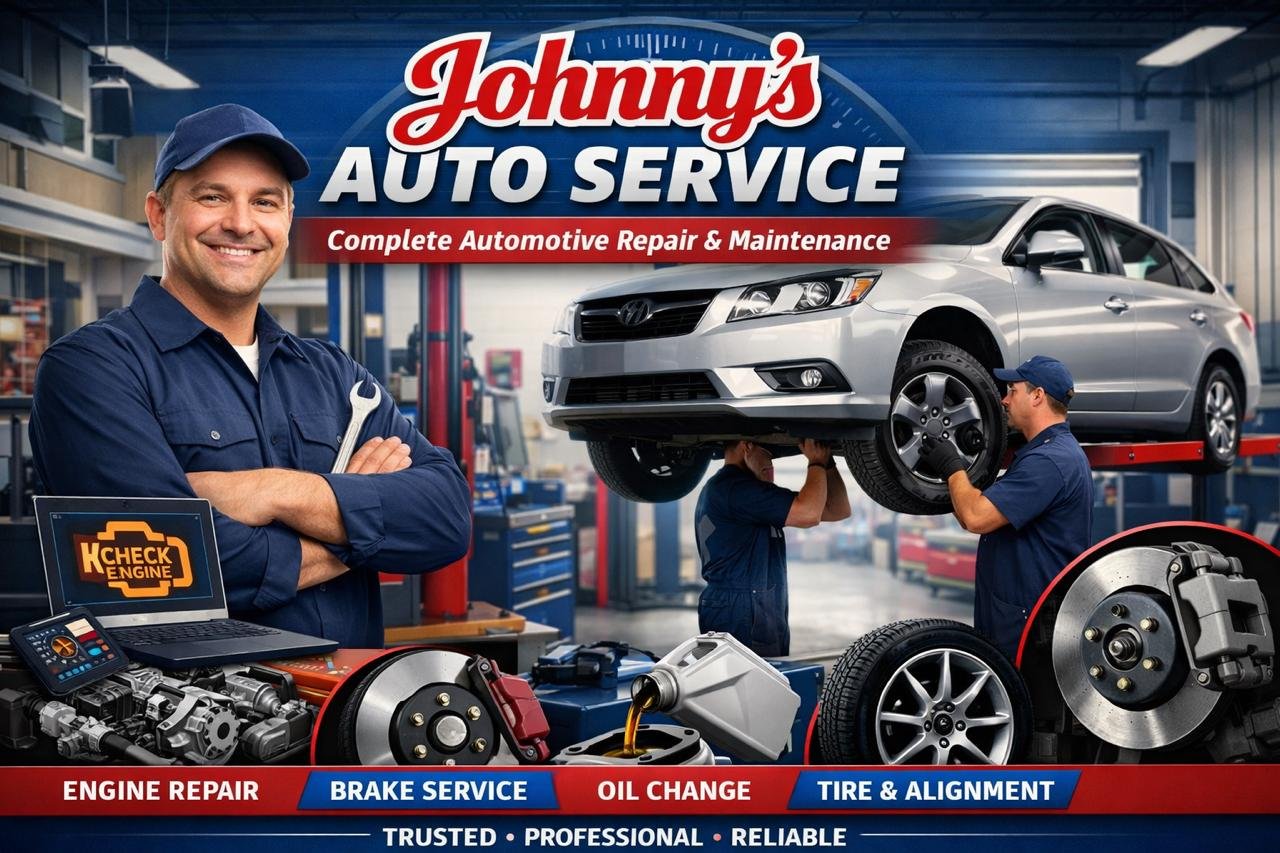
In today’s fast-paced world, owning a vehicle is not just a convenience—it is a necessity. From daily commutes to long-distance travel, your vehicle must perform reliably under all conditions. This is where Johnny’s Auto Service stands out as a trusted name in professional automotive repair and maintenance. With a strong commitment to quality, integrity, and customer satisfaction, Johnny’s Auto Service has built a reputation for delivering dependable solutions that keep vehicles running safely and efficiently.
Unlike generic repair shops, Johnny’s Auto Service focuses on precision diagnostics, transparent service processes, and long-term vehicle care. Whether it’s a routine oil change or a complex engine repair, customers can rely on expert workmanship backed by experience and industry best practices.
A Legacy of Trust and Professional Automotive Care
One of the defining characteristics of Johnny’s Auto Service is its dedication to honest, customer-focused service. Trust is earned through consistent performance, and this auto service provider has demonstrated reliability across all levels of vehicle maintenance and repair.
Every vehicle is treated with the same attention to detail, regardless of make or model. This philosophy has helped Johnny’s Auto Service establish long-term relationships with customers who return year after year for dependable automotive care.
Comprehensive Automotive Services Under One Roof
1. Complete Auto Repair Solutions
Johnny’s Auto Service offers a full range of auto repair services designed to address mechanical, electrical, and performance-related issues. Using advanced diagnostic tools and proven repair techniques, technicians quickly identify problems and implement effective solutions.
Key repair services include:
- Engine diagnostics and repair
- Transmission service and repair
- Brake system inspection and replacement
- Steering and suspension repairs
- Electrical system troubleshooting
Each repair is performed following manufacturer guidelines to ensure optimal performance and safety.
2. Preventive Maintenance Services
Preventive maintenance is critical to extending the life of your vehicle. Johnny’s Auto Service emphasizes routine maintenance to help customers avoid costly repairs and unexpected breakdowns.
Preventive services include:
- Oil and filter changes
- Fluid inspections and replacements
- Belt and hose inspections
- Battery testing and replacement
- Tire rotation and alignment checks
Regular maintenance at Johnny’s Auto Service ensures peak efficiency, improved fuel economy, and reduced wear on critical components.
3. Brake and Safety System Expertise
Your vehicle’s braking system is essential to road safety. Johnny’s Auto Service specializes in comprehensive brake services, ensuring every component functions correctly.
Brake services include:
- Brake pad and rotor replacement
- Brake fluid exchange
- Anti-lock braking system diagnostics
- Noise and vibration correction
By prioritizing safety, Johnny’s Auto Service helps protect drivers, passengers, and other road users.
4. Engine Performance and Diagnostics
Modern vehicles rely heavily on computerized systems. Johnny’s Auto Service uses state-of-the-art diagnostic equipment to analyze engine performance accurately.
Services include:
- Check engine light diagnostics
- Fuel system cleaning
- Emissions system inspection
- Engine tuning and optimization
Accurate diagnostics minimize guesswork and ensure precise repairs that restore engine performance efficiently.
Highly Skilled Technicians and Advanced Technology
The backbone of Johnny’s Auto Service is its team of experienced and highly trained automotive technicians. Their technical expertise spans domestic and foreign vehicles, ensuring comprehensive service coverage.
Technicians stay updated with evolving automotive technologies, enabling Johnny’s Auto Service to service modern vehicles equipped with advanced electronics and hybrid systems. This commitment to continuous learning ensures accuracy, efficiency, and reliability in every repair.
Customer-Centric Service Philosophy
Transparent Communication
At Johnny’s Auto Service, customers are informed at every stage of the repair process. Clear explanations, honest assessments, and upfront estimates eliminate uncertainty and build trust.
Fair Pricing and Value
Quality automotive care should be accessible. Johnny’s Auto Service balances premium workmanship with competitive pricing, delivering excellent value without compromising standards.
Timely Service Delivery
Time matters. The team at Johnny’s Auto Service works efficiently to minimize downtime while maintaining high repair quality.
Commitment to Quality and Reliability
Every service at Johnny’s Auto Service is guided by strict quality control measures. From diagnostic accuracy to final inspections, each step is carefully monitored to ensure superior outcomes.
The focus on long-term reliability ensures that repairs are not just temporary fixes but lasting solutions that enhance vehicle performance and durability.
Serving All Makes and Models
Johnny’s Auto Service services a wide range of vehicles, including:
- Sedans and compact cars
- SUVs and crossovers
- Pickup trucks
- Luxury vehicles
- Fleet and commercial vehicles
This versatility makes Johnny’s Auto Service a one-stop solution for diverse automotive needs.
Why Choose Johnny’s Auto Service?
Choosing the right auto repair shop can be challenging. Here’s why Johnny’s Auto Service stands apart:
- Experienced and certified technicians
- Comprehensive service offerings
- Advanced diagnostic technology
- Honest and transparent service approach
- Strong focus on customer satisfaction
These qualities make Johnny’s Auto Service a preferred choice for drivers seeking dependable automotive care.
Long-Term Vehicle Health and Performance
Routine service at Johnny’s Auto Service helps maintain optimal vehicle performance while reducing long-term repair costs. Preventive maintenance identifies potential issues early, ensuring smooth operation and peace of mind.
Professional Standards and Ethical Practices
Integrity is a core value at Johnny’s Auto Service. Every recommendation is based on actual vehicle needs rather than unnecessary upselling. This ethical approach reinforces customer confidence and long-term loyalty.
Future-Focused Automotive Solutions
As vehicle technology evolves, Johnny’s Auto Service continues to adapt by investing in tools, training, and modern service methodologies. This future-focused approach ensures readiness for emerging automotive trends and technologies.
Conclusion
Johnny’s Auto Service represents more than just an auto repair shop—it is a trusted partner in vehicle care. Through expert craftsmanship, transparent communication, and a customer-first philosophy, Johnny’s Auto Service consistently delivers reliable automotive solutions.
For drivers who value quality, honesty, and professional service, Johnny’s Auto Service remains a dependable choice for maintaining vehicle safety, performance, and longevity.
Blog
Auto Repair Milford NH: Trusted Automotive Care Backed by Experience, Integrity, and Community Commitment

Introduction
When it comes to dependable auto repair in Milford, NH, vehicle owners consistently look for more than just basic mechanical fixes. They seek trust, technical excellence, transparent pricing, and a service provider who values long-term relationships over short-term transactions. In a region where vehicles play a vital role in daily commuting, family responsibilities, and business operations, choosing the right auto repair shop is a critical decision.
Gurney’s Automotive stands as a respected name in the New Hampshire automotive service landscape, particularly for residents searching for professional auto repair Milford NH solutions. As a family-owned business with decades of experience, the shop has built a reputation rooted in honesty, reliability, and superior workmanship. Since its establishment in 1985, Gurney’s Automotive has consistently delivered high-quality automotive repairs while maintaining a strong connection to the local community.
This article provides a comprehensive overview of professional auto repair services in Milford, NH, with a detailed focus on what sets Gurney’s Automotive apart. From advanced diagnostics and ASE-certified technicians to customer-first service values and long-term warranties, this guide explores why local drivers continue to rely on trusted automotive professionals.
The Importance of Professional Auto Repair in Milford, NH
Milford, New Hampshire, experiences a wide range of driving conditions throughout the year. From icy winter roads to humid summer heat, vehicles in this region are subject to constant environmental stress. Regular maintenance and timely repairs are essential not only for performance but also for safety and longevity.
Professional auto repair Milford NH services help drivers address issues before they escalate into costly breakdowns. Qualified automotive technicians understand how local weather patterns, road conditions, and driving habits affect vehicles differently than in other regions. This localized knowledge is invaluable when diagnosing problems and recommending appropriate solutions.
Choosing a reputable repair facility ensures:
- Accurate diagnostics using modern equipment
- Manufacturer-recommended repair procedures
- Quality replacement parts
- Compliance with New Hampshire state inspection standards
- Long-term reliability and vehicle safety
Gurney’s Automotive has structured its service model to meet these exact needs, offering Milford residents a dependable solution for comprehensive auto care.
A Family-Owned Auto Repair Business Built on Trust
One of the defining characteristics of Gurney’s Automotive is its identity as a family-owned and operated auto repair shop. Family ownership often translates into deeper accountability, stronger customer relationships, and a long-term commitment to service excellence.
Since 1985, the business has upheld core values of honesty, integrity, and transparency. These principles guide every interaction—from initial vehicle inspections to final repair recommendations. Customers are informed clearly about the condition of their vehicles, the urgency of repairs, and the associated costs, allowing them to make confident and informed decisions.
In the competitive auto repair Milford NH market, trust is not built overnight. It is earned through consistent service quality, fair pricing, and genuine care for customers’ safety and satisfaction. Gurney’s Automotive’s longevity is a testament to its ability to deliver on these promises year after year.
Comprehensive Auto Repair Services in Milford, NH
Modern vehicles are complex systems that require specialized knowledge and tools to maintain properly. Gurney’s Automotive provides a full range of automotive services designed to meet the diverse needs of Milford drivers.
General Automotive Repairs
From minor fixes to major mechanical repairs, professional auto repair services cover a wide spectrum of issues, including:
- Engine diagnostics and repair
- Transmission service and maintenance
- Brake system inspection and repair
- Suspension and steering repairs
- Exhaust system service
Each repair is approached with precision and attention to detail, ensuring that vehicles return to the road operating safely and efficiently.
Preventive Maintenance Services
Preventive maintenance is one of the most cost-effective ways to extend vehicle lifespan and prevent unexpected failures. Regular maintenance services offered include:
- Oil and filter changes
- Fluid checks and replacements
- Belt and hose inspections
- Battery testing and replacement
- Tune-ups and performance checks
For those seeking reliable auto repair Milford NH, preventive care is essential in avoiding costly breakdowns and maintaining optimal vehicle performance.
Advanced Diagnostic Technology for Accurate Repairs
Modern vehicles rely heavily on computer-controlled systems. Diagnosing issues accurately requires advanced diagnostic tools and trained technicians who know how to interpret complex data.
Gurney’s Automotive utilizes state-of-the-art diagnostic technology to identify problems quickly and accurately. This approach minimizes guesswork, reduces repair time, and ensures that only necessary repairs are performed.
Advanced diagnostics are especially important for:
- Check engine light issues
- Electrical system faults
- Emissions-related problems
- Performance inconsistencies
By investing in modern technology, the shop reinforces its commitment to delivering precise and reliable auto repair Milford NH services.
ASE-Certified Technicians: A Mark of Professional Excellence
The quality of any auto repair service ultimately depends on the expertise of its technicians. Gurney’s Automotive employs ASE-certified technicians, a designation that reflects rigorous testing and ongoing education in automotive repair standards.
ASE certification ensures that technicians possess:
- Up-to-date knowledge of vehicle systems
- Proven diagnostic and repair skills
- Commitment to professional development
- Adherence to industry best practices
For Milford drivers, this certification provides peace of mind, knowing their vehicles are in the hands of qualified professionals who understand the complexities of modern automotive engineering.
Tire Sales and Services for All Driving Conditions
Tires play a critical role in vehicle safety, handling, and fuel efficiency. Choosing the right tires and maintaining them properly is especially important in New Hampshire’s changing weather conditions.
Professional tire services include:
- Tire sales from reputable brands
- Tire mounting and balancing
- Tire rotation and alignment checks
- Seasonal tire changeovers
Reliable auto repair Milford NH providers understand local driving demands and help customers select tires suited for both winter and summer conditions. Proper tire care improves traction, reduces wear, and enhances overall driving comfort.
New Hampshire State Inspections and Compliance
All registered vehicles in New Hampshire must undergo periodic state inspections to ensure compliance with safety and emissions standards. These inspections help keep roads safe and vehicles operating within legal requirements.
A professional auto repair shop provides:
- Certified state inspection services
- Transparent explanations of inspection results
- Necessary repairs to meet compliance standards
Gurney’s Automotive performs state inspections with integrity, ensuring vehicles meet regulations while avoiding unnecessary repairs. This balanced approach supports both safety and customer trust.
Warranty Protection That Reflects Confidence in Quality
One of the strongest indicators of a repair shop’s confidence in its workmanship is the warranty it offers. Gurney’s Automotive provides a 2-year/24,000-mile warranty on qualifying repairs.
This warranty reflects:
- High-quality parts usage
- Skilled repair execution
- Commitment to long-term customer satisfaction
For anyone seeking dependable auto repair Milford NH, warranty protection adds significant value and peace of mind, ensuring repairs are backed by accountability and professionalism.
Customer-Centered Service Philosophy
Exceptional customer service is more than courteous communication—it involves listening, transparency, and respect for customers’ time and budgets. Gurney’s Automotive has built its reputation on delivering a positive customer experience at every stage of the repair process.
Key aspects of its service philosophy include:
- Clear explanations without technical jargon
- Honest recommendations based on vehicle needs
- Fair and competitive pricing
- Timely repairs and accurate estimates
This customer-first approach has made the shop a trusted choice for families and individuals throughout Milford and surrounding communities.
Serving the Milford and Greater New Hampshire Community
Local auto repair businesses play an important role in supporting their communities. As a locally operated shop, Gurney’s Automotive understands the needs and expectations of New Hampshire drivers.
By focusing on auto repair Milford NH, the business strengthens community relationships, supports local employment, and contributes to regional economic stability. Customers are not treated as numbers, but as neighbors whose safety and satisfaction matter.
This local focus distinguishes family-owned shops from large, impersonal chains and reinforces long-term loyalty among customers.
Why Local Drivers Choose Gurney’s Automotive for Auto Repair Milford NH
Several key factors consistently influence why Milford residents rely on this trusted auto repair provider:
- Decades of proven experience since 1985
- Family-owned values centered on honesty and integrity
- ASE-certified technicians and modern equipment
- Comprehensive services under one roof
- Strong warranty protection
- Commitment to customer education and transparency
These qualities align with what discerning vehicle owners expect when searching for professional auto repair Milford NH services.
The Long-Term Value of Choosing the Right Auto Repair Shop
Selecting a reliable auto repair provider is an investment in your vehicle’s longevity, safety, and performance. While short-term fixes may appear cost-effective, they often lead to recurring issues and higher expenses over time.
Professional auto repair services emphasize:
- Correct diagnostics the first time
- Preventive maintenance strategies
- Quality workmanship and parts
- Long-term reliability
By choosing a trusted shop, Milford drivers protect their vehicles and reduce overall ownership costs.
Conclusion: A Trusted Name in Auto Repair Milford NH
For drivers seeking dependable, high-quality auto repair Milford NH, Gurney’s Automotive represents a benchmark of excellence. With a foundation built on family values, technical expertise, and community commitment, the shop continues to set high standards for automotive care in New Hampshire.
From routine maintenance and tire services to advanced diagnostics and state inspections, every service is delivered with professionalism and integrity. Backed by experienced ASE-certified technicians and a strong warranty, Gurney’s Automotive offers Milford residents a reliable partner for all their automotive needs.
Choosing the right auto repair shop is about more than fixing a vehicle—it is about trust, safety, and long-term peace of mind. In Milford, NH, that trust is earned through decades of consistent, customer-focused service.

In the digital world, unfamiliar words often appear and instantly spark curiosity. One such term is wachappe. At first glance, it feels close to something familiar yet clearly different, which makes people stop, read it again, and search for its meaning. In this detailed article, we will explore wachappe in depth, looking at its possible meaning, why people search for it, and how such terms gain relevance in modern online culture.
Understanding the Term Wachappe
Wachappe is not a standard English word found in dictionaries. This alone makes it interesting. It appears to be either a coined term, a variation of an existing word, or a digital nickname created for a specific purpose. Words like wachappe often gain meaning through use rather than definition.
Why Wachappe Feels Familiar
One reason wachappe attracts attention is its resemblance to commonly known digital terms. This familiarity creates an instant connection, while the altered spelling keeps it unique. This balance between recognition and originality is powerful in online spaces.
Possible Origins of Wachappe
Wachappe may be inspired by modern communication platforms or informal digital language. Internet users frequently modify spellings to create usernames, brand names, or project titles that feel familiar but remain original and searchable.
Wachappe as a Digital Identity
In today’s online environment, a word can become an identity. Wachappe could function as a username, app name, website title, or digital brand. Because it has no fixed definition, it allows complete freedom in shaping its purpose and image.
Why People Search for Wachappe
People usually search for wachappe out of curiosity. Seeing it in a message, app, website, or online discussion naturally triggers questions. This curiosity-driven behavior is one of the strongest forces behind online searches.
SEO Value of a Keyword Like Wachappe
From an SEO perspective, wachappe is a low-competition keyword. Unique or uncommon words are easier to rank for in search engines, making them attractive for niche websites, experimental content, or new digital projects.
Wachappe in Branding and Naming
Branding thrives on memorability, and wachappe offers exactly that. A name that sounds familiar yet looks unique can quickly stick in the mind. Once associated with a product or service, wachappe can develop strong brand recognition.
Psychological Impact of Unusual Spellings
Unusual spellings like wachappe activate curiosity and attention. When users encounter such words, they pause and try to decode them. This mental engagement increases memorability and user interest.
Wachappe and Internet Culture
Internet culture celebrates creativity and experimentation. Modified words, playful spellings, and abstract terms often gain popularity simply because they feel fresh. Wachappe fits naturally into this culture of digital innovation.
Could Wachappe Have a Hidden Meaning
Sometimes, invented terms carry symbolic meaning chosen by their creator. Wachappe could represent communication, connection, or innovation depending on how it is used. Its meaning can evolve with context.
Use of Wachappe in Creative Projects
Creative professionals often prefer unique words that leave room for interpretation. Wachappe could be used in storytelling, branding, digital art, or software projects as a flexible and imaginative label.
Wachappe as a Placeholder Term
In development and design environments, distinctive words are often used as placeholders. Wachappe could serve this purpose, helping creators avoid confusion with common terms during testing phases.
How Wachappe Gains Meaning Over Time
Meaning is built through association. As wachappe is used repeatedly in a specific context, people begin to connect it with a particular idea, service, or community. Over time, the word gains identity.
Flexibility of the Term Wachappe
One of wachappe’s strengths is flexibility. It can adapt to various industries such as technology, media, communication, or entertainment without being restricted by existing definitions.
Challenges of Using Wachappe
While originality is valuable, it also requires explanation. Users may initially misunderstand or mispronounce wachappe. Clear messaging and consistent branding help overcome this challenge.
Wachappe in a Competitive Digital Space
Standing out online is difficult, but wachappe naturally attracts attention. Its distinct spelling helps it stand apart from generic terms, making it easier to remember in crowded digital environments.
Why Unique Words Like Wachappe Matter
Unique words reflect modern digital creativity. They allow individuals and brands to define their own meaning rather than inherit one. Wachappe represents this shift toward originality and self-defined identity.
Future Potential of Wachappe
As digital platforms continue to grow, unique terms will become even more valuable. Wachappe has the potential to evolve into a recognizable brand or concept if used consistently and strategically.
Conclusion
Wachappe may not yet have a dictionary definition, but it holds value through curiosity, familiarity, and originality. It reflects how modern language evolves online, shaped by creativity and user behavior. Whether used for branding, digital identity, or experimentation, wachappe shows how even a simple invented word can gain meaning and relevance in today’s connected world.
FAQs
What is wachappe?
Wachappe is a unique, non-standard term often associated with digital identity or online curiosity.
Is wachappe an English word?
No, it is not a traditional English word and appears to be a coined or modified term.
Why does wachappe sound familiar?
Its structure resembles common digital terms, creating a sense of familiarity while remaining unique.
Is wachappe good for SEO?
Yes, uncommon keywords like wachappe face little competition and can rank more easily.
Can wachappe be used as a brand name?
Yes, its originality and memorability make it suitable for branding or creative projects.
-
 General3 months ago
Adonismale: The Ultimate Guide to the Modern Male Aesthetic
-
 Entertainment3 months ago
Kirby Dedo: Meaning, Meme & Finger Puppet Trend
-
 Blog3 months ago
Candizi: Sweet Innovation for Modern Living
-
 Health3 months ago
Health Threetrees Com VN: Your Online Health Guide
-
 Tech3 months ago
ComicsArmy: Your Complete Guide to Free Comics & Safe Reading
-
 Health3 months ago
Insoya: Next-Gen Soy Protein for Health & Sustainability
-
 Business & Finance3 months ago
Awius: Earned-Wage Access, Uses & Benefits
-
 Tech3 months ago
MamgaBuddy: Revolutionizing Digital Connections for Everyone